|

|

|
|
|

|

|
|
|
|
|
|
|
|
|
| Waveguide Pipe Penetrations |
 |
 |
 |
Xalon RF Shielded Waveguide Pipe Penetrations |
|||||||||||||||||||||||||||||||||||||||||||||||||||
Schedule 40 Brass
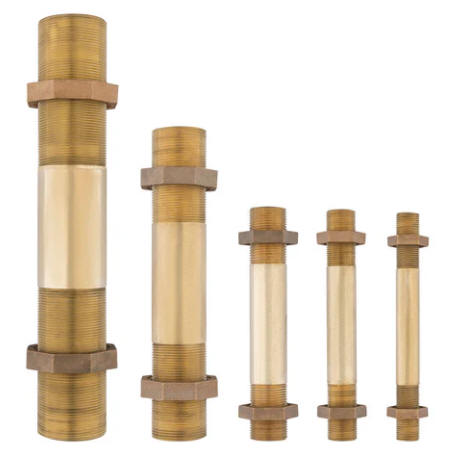
Brass Waveguide Pipe Penetrations
|
Xalon RF Shielding Systems was created with a commitment to developing unique RF shielding solutions. We have taken Radio Frequency/Electro Magnetic Interference shielding to a whole new level of performance. Our extensive expertise allows us to offer a variety of products to meet every type of electro-magnetic shielding concern. Pipe penetrations or waveguide below cutoff frequency pipe, allow needed utilities, fluids, gases, and cables to pass through the RF shielded/SCIF room barrier without leaking electromagnetic energy or RF signals. |
||||||||||||||||||||||||||||||||||||||||||||||||||
|
Our team has over 50 years of experience within the EMI/RFI shielding industry. With quality management and decades of manufacturing experience at the forefront, our lab tested products offer solutions for each unique environment. High performance products designed to make installation more efficient, we reduce labor costs significantly. Manufactured in the United States, our Ohio location offers quick delivery to all 50 states. Applications Fire Suppression & Sprinkler Pipe Hot & Cold Water Supply Air Supply Fluid Supply Fiber Optic & Non-Conductive Cabling Aspirating Smoke Detection (VESDA) Quench Pipes (MRI) Medical & Clinical Gases: Carries oxygen, medical air, vacuum lines, and nitrous oxide into specialized environments like MRI suites How It Works for Circular Waveguides fc = cutoff frequency c = speed of light, 1.181 x 10¹⁰ in/s r = radius of circular waveguide in inches d = inside diameter of the pipe
For a circular waveguide, the dominant mode cutoff frequency is approximately: Metric System: fc ≈ 175.8/d in GHz (d in mm) (d = 2r) US Customary System: fc ≈ c/3.412r in GHz (r in inches) (r = 1/2 d)The waveguide lets frequencies above fc pass through with little or no loss, while aggressively blocking frequencies below fc.
General Rule of Thumb for Circular
Waveguides for RF Shielding:
XWPPA-I.D. All Made in the USA, meets BABA XWPP-I.D. Foreign Made Brass Pipe & Nuts |
|||||||||||||||||||||||||||||||||||||||||||||||||||
|
|
|||||||||||||||||||||||||||||||||||||||||||||||||||
|
Features Threading is NPS (National Pipe Straight) Quality Brass Material Non-ferrous Schedule 40 Brass Pipe Highly Durable & Malleable Tolerant of High Temperatures Melting Point at 1810°F to 1880°F Ease of Installation Custom Lengths Available
|
Codes & Certificates ASTM B43 (Standard Specification for Seamless Red Brass Pipe) Meets the Intelligence Community Directive. Number 705. Sensitive Compartmented Information Facilities (ICD 705), SEPF, PTB, TEMPEST or EMSEC RequirementMade in the USA Meets the Build America, Buy America Act (BABA) Meets EMP Protection Levels 1, 2, 3 & 4 for Infrastructure RF Shielding |
||||||||||||||||||||||||||||||||||||||||||||||||||
|
|
|||||||||||||||||||||||||||||||||||||||||||||||||||
|
How does stuffing brass, bronze or copper wool into the waveguide pipe penetration that is empty or has fiber-optic line going through it? Brass wool can change how much RF gets through a pipe penetration, but there’s no reliable rule for how much it raises or lowers the cutoff frequency. A finite plug of wool acts as an insert that can reflect and dissipate RF energy. The open sections of pipe still have their original cutoff. A drop in measured transmission after adding the wool tells you the assembly attenuates more at that frequency. By itself, it doesn’t establish a new cutoff, but due to the smaller opening sizes of the wool, the cutoff frequency is raised to a higher frequency. The RF field decays along the pipe. A smaller bore raises the cutoff, while a longer bore increases attenuation below cutoff. For a RF shielded SCIF waveguide pipe penetration, use the empty bore calculation as the baseline. To quantify what the wool adds, sweep RF transmission across the required band with the pipe empty and then packed, keeping the fixture and pipe bonding the same. Why do I need to use EMI Filters instaed of a pipe penetration? As a general rule, do not run metallic power, communication, thermostat, fire alarm, etc. wires through a waveguide pipe penetration. The best solution is to install an EMI Filter that is mounted to the RF shielded barrrier, to eliminate the conducted RF riding on the metallic wires. The wires act just like an antenna, bringing RF signals in and sending RF signals out, of the RF shielded room. |
|||||||||||||||||||||||||||||||||||||||||||||||||||
Universal RF Shielded Pipe Penetrations (Galvanized Steel) |
|
Information Coming Soon |
 |
|
Copyright © 2001- R. A. Mayes Company, Inc. An Electro Mechanical Research and Development (EMRAD) Corporation, Company See our Privacy Policy All the data files on our website require Adobe Acrobat Reader! |